
Black History
On Its 169th Anniversary the Fugitive Slave Act Is Under Fire…And, Rightfully So

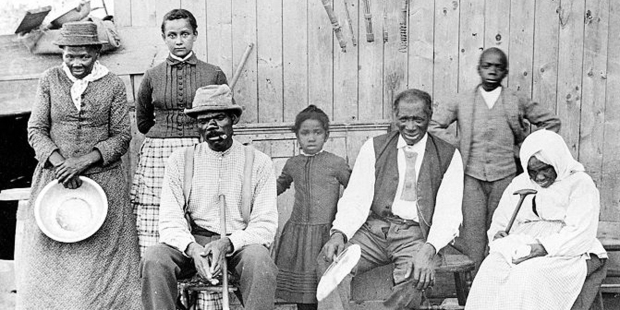
As the nation spends the week reviewing the Constitution, a long-forgotten clause is drawing the attention of some Constitutional Law professors and even a Supreme Court Justice. The Fugitive Slave Act contained in Article IV, Section 2, Clause 3 of the Constitution, albeit mostly irrelevant, is still part of the veritable document.
“The Fugitive Slave Act is an embarrassment,” Supreme Court Justice Ruth Bader Ginsburg said recently during an appearance at a Clinton Foundation event in Little Rock, Arkansas that attracted a crowd of 15,000.
Congress passed the Fugitive Slave Act on September 18, 1850 as part of the 1850 Compromise, which was struck between the Southern slave states and the Northern free states. The Act required that all slaves who escaped to the North would be returned to their masters and mandated that officials and residents of free states cooperate. It was nicknamed the “Bloodhound Act” for the dogs used to track down the enslaved.
Law professor and author, Andre Douglas Pond Cummings, described the hypocrisy of Southern lawmakers who typically opposed government intervention but advocated for the government’s involvement in the preservation of slavery by insisting that escaped men and women were captured and returned to the mistreatment and injustice they had fled.
“It’s one of the most ironic sections of the Constitution that exists,” Cummings said. “If you think about the South, the South is about ‘Don’t tread on me’…this provision says, ‘I don’t care if you’re a free state.’ It was an impingement of the South on the North.”
Today, awareness of the Fugitive Slave Act is increasing. In many instances, Black Americans are shocked to learn that the Act is still included in the Constitution.
On the 169th anniversary of the Fugitive Slave Act critics are urging Black Americans and others disturbed to discover that language about capturing slaves is still a part of the United States’ governing document to harness their “political willpower” for change.








-
 Featured9 months ago
The untold story of a Black woman who founded an Alabama hospital during Jim Crow
-

 Featured12 months ago
Five Facts You Need To Know About SNAP
-

 Featured12 months ago
US Black Chambers of Commerce Makes History with Campus for Entrepreneurship
-

 Featured5 months ago
Trump’s Use of “low IQ” Insult Reveals His View of Black Americans
-

 Featured5 months ago
A Timeline of the Tulsa Massacre Mass Graves Discovery on the 105th Commemoration
-

 Featured5 months ago
Republican-led Redistricting Could Cost Congressional Black Caucus 1/3 of Its Members