
Black History
Five Facts to Know About the Civil Rights Act of 1964 on its Anniversary

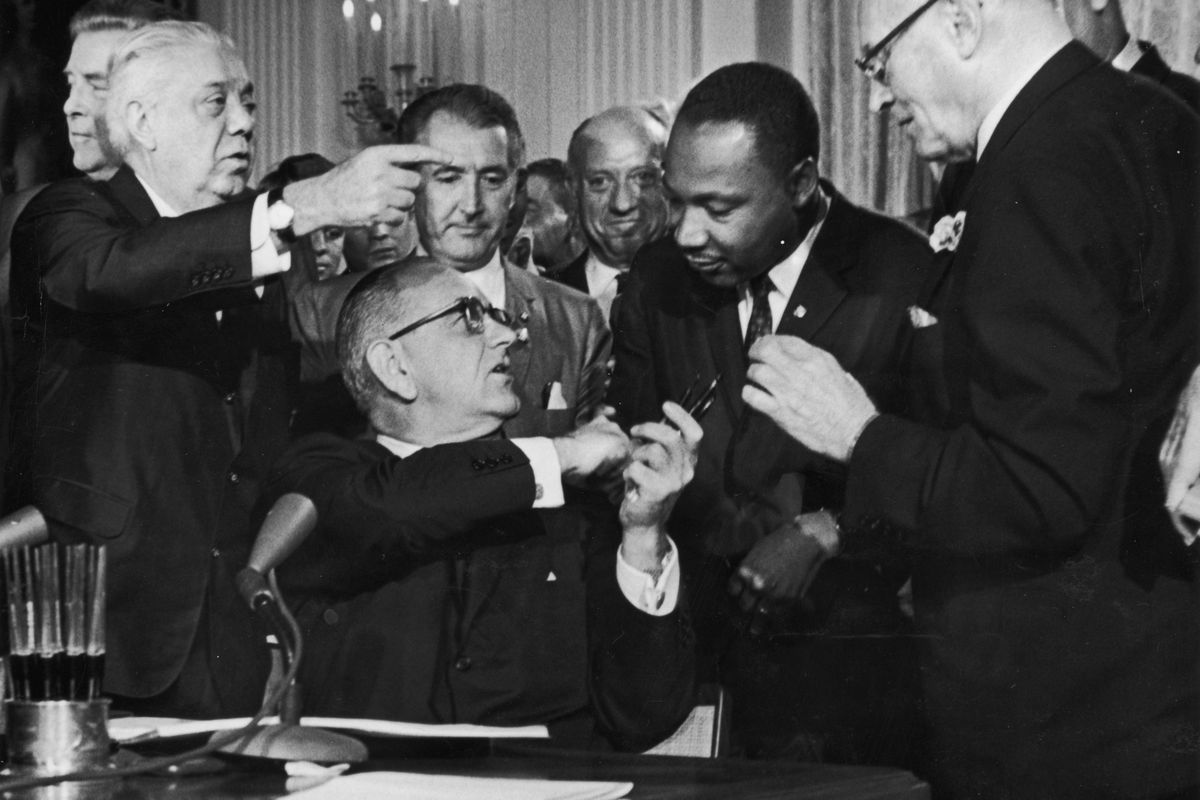
Fifty-six years have passed since President Lyndon Johnson signed the Civil Rights Act of 1964 into law. The legislation represented the first major social justice accomplishment in decades and was the harvest of years of nonviolent protests led by Dr. Martin Luther King and a cadre of courageous men and women. Below are five facts about the Civil Rights Act of 1964:
Segregation was no longer allowed in public places.

Workplace discrimination based on race, color, religion, sex, or national origin was banned.

President John F. Kennedy was the first to propose the landmark legislation in June 1963. After he was assassinated in Dallas that November, Lyndon B. Johnson took up the cause and shepherded it through Congress.

Strong opposition from some Southern lawmakers who staged a 75-day filibuster, one of the longest in American history. Senator Robert Byrd of West Virginia, who was a former member of the Ku Klux Klan, spoke for over 14 consecutive hours.

The Civil Rights Act of 1964 paved the way for the Voting Rights Act of 1965 which overcame legal barriers imposed on African Americans to suppress their right to vote.


-

 Featured8 months ago
The untold story of a Black woman who founded an Alabama hospital during Jim Crow
-

 Featured10 months ago
Five Facts You Need To Know About SNAP
-

 Featured10 months ago
US Black Chambers of Commerce Makes History with Campus for Entrepreneurship
-

 Featured4 months ago
Trump’s Use of “low IQ” Insult Reveals His View of Black Americans
-

 Featured3 months ago
A Timeline of the Tulsa Massacre Mass Graves Discovery on the 105th Commemoration
-

 Featured4 months ago
Republican-led Redistricting Could Cost Congressional Black Caucus 1/3 of Its Members