
Black History
Five Facts to Know About the Civil Rights Act of 1964 on its Anniversary

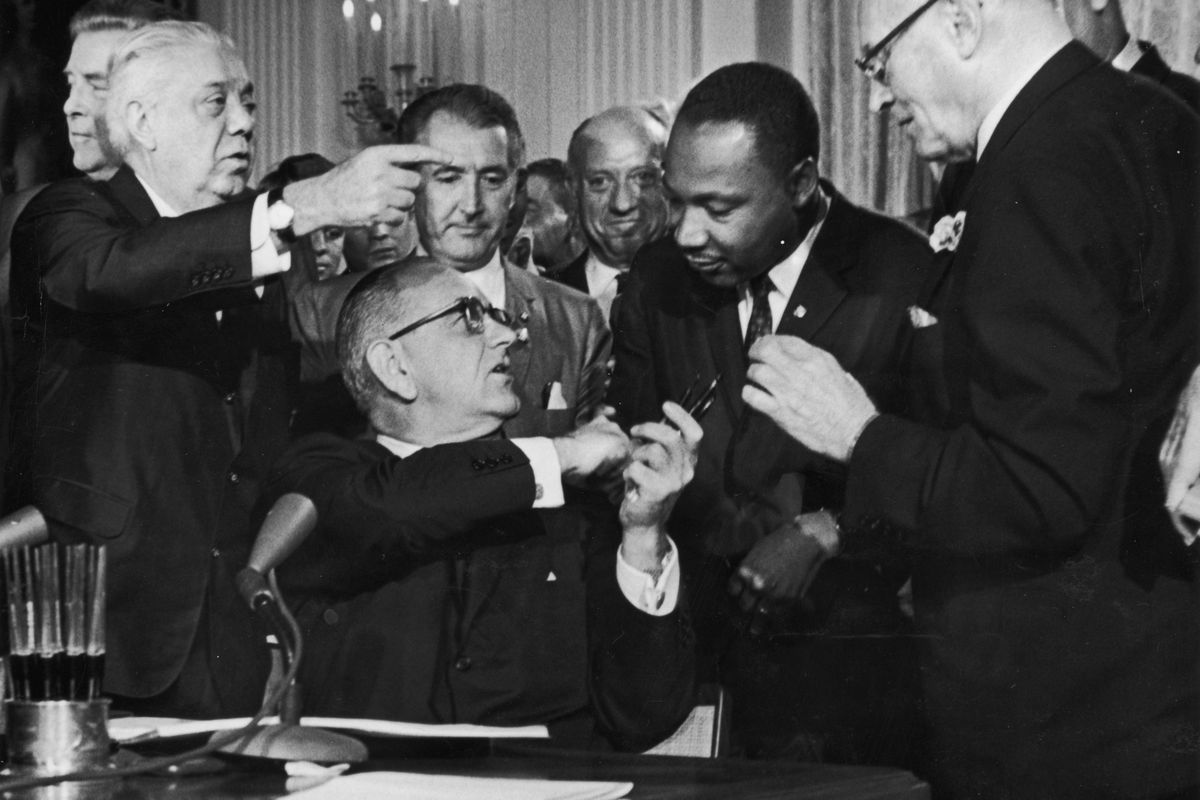
Fifty-six years have passed since President Lyndon Johnson signed the Civil Rights Act of 1964 into law. The legislation represented the first major social justice accomplishment in decades and was the harvest of years of nonviolent protests led by Dr. Martin Luther King and a cadre of courageous men and women. Below are five facts about the Civil Rights Act of 1964:
Segregation was no longer allowed in public places.

Workplace discrimination based on race, color, religion, sex, or national origin was banned.

President John F. Kennedy was the first to propose the landmark legislation in June 1963. After he was assassinated in Dallas that November, Lyndon B. Johnson took up the cause and shepherded it through Congress.

Strong opposition from some Southern lawmakers who staged a 75-day filibuster, one of the longest in American history. Senator Robert Byrd of West Virginia, who was a former member of the Ku Klux Klan, spoke for over 14 consecutive hours.

The Civil Rights Act of 1964 paved the way for the Voting Rights Act of 1965 which overcame legal barriers imposed on African Americans to suppress their right to vote.


-

 Featured8 months ago
Why the Statue of Liberty Sculptor Placed A Chain at Its Feet Instead of in the Left Hand
-

 Featured7 months ago
A Whites-Only Community in Arkansas Draws Widespread Criticism
-

 Featured11 months ago
Trump Signs Executive Orders That Will Impact HBCUs and Black Schoolchildren
-

 Featured7 months ago
First, It Was Obama. Now Trump Lobs A False Claim At Beyonce to Shift Focus From Epstein.
-

 Featured8 months ago
The I.R.S. Moves to Allow Churches to Endorse Political Candidates, Ending A Decades-long Ban
-

 Featured7 months ago
Meet Jolanda Jones and Borris Miles: Black Texas Lawmakers Fighting Redistricting